Big Business “moat” hinders free enterprise

As we know, there is a lot of American frustration about a “rigged economy.”  This frustration is demonstrated by the candidacies of Donald Trump and Bernie Sanders and the support they have garnered.    This month’s edition of The Economist has a briefing, exploring the role excess profits plays in this economy.  It is an enlightening look at why these excess profits might be the worst enemy of the free enterprise we Americans so value.

The Economist observes that profits are at a near record level for large American companies.  These profits, when coupled with the concentration of ownership of large firms means that ecomomic growth is being hoarded.  In a normal economy, this hoarding could not continue because new companies would see the profits and jump in to compete.  In this economy, however, these large companies have built “moats” around themselves, keeping competition away.  Companies acquire other companies and get out of businesses where they do not dominate.  Since 2008, the American economy has seen a huge number of mergers, allowing companies to increase their market share while driving out competition.  These merged companies have not grown larger, but have narrowed their focus on areas where they can dictate prices because nobody else competes.  Record cash flow and return on investment have not been reinvested in the companies nor passed down to employees as higher wages.

But profits are good, right?  Well, yes, but hoarding profits can result in a shortage of demand, which makes for a sick economy.  The stock market keeps going up, while Americans have not had a raise.  If Americans don’t get raises, they cannot afford that new car or that new house.  The American middle class is feeling squeezed, and for good reason.  There is no trickle-down, folks!

According to the Economist, prices should be a lot lower in an economy the size of America, but the “naughty little secret” is that the return on investment is 40% higher at home than abroad.  You know those pharmaceuticals that are cheaper in Canada than in the United States?  That’s a good example.  Big Pharma charges Americans more, but new companies cannot compete because of the difficult regulation in the drug industry and patent laws which protect the big pharma companies.  Big Pharma gripes about regulation, but the bureaucracy actually protects them once they know how to negotiate around the regulations.  Hence, the “moat” around Big Pharma.

The creation of new American small businesses is at the lowest point since the 1970’s.  It’s no wonder that two thirds of Americans believe the economy is rigged to favor those already at the top.  When is the last time you heard about someone opening a new pharmacy, lumber yard, hardware store or any small business?  Is all this concentration of money really good for main street America?

About a quarter of these excess profits are in the health care industry, where a group of pharmacy and medical equipment companies make an astonishing 20% to 50% aggregate return on their capitol.  Of course, the moat is deep and broad around these firms, with protectionist regulations and patents.  It is important to remember that most health care purchasing is ultimately done by insurance companies.    The largest health insurers are planning to merge into two companies in the near future.  Can you imagine the moat around those two new companies?

Do you kids remember when Microsoft was being sued for violating anti-trust laws because it bundled “Explorer” with “Office?”  That was in 2000.  Microsoft’s operating profits are twice what they were when they were being sued.  So much for anti-trust enforcement.

Why don’t anti-trust laws keep these excess profits from being hoarded?  The Economist suggests two limitations.  First, the  Federal Trade Commission and Department of Justice can only enforce violations of the law and the hoarding of excess profits alone is not unlawful.  Second, the current philosophy is not to automatically suspect anti-trust activity.  Prior guidelines created a presumption of anti-trust activity if a deal included a company with a 35% market share; but that presumption has been abandoned.  Instead, now each situation is examined individually to see if consumers have less choice or if a company is allowed to raise prices.  Consequently, it is much more difficult to make a case absent the presumption of anti-trust activity.

Clearly, this excess profit hoarding is not good for the larger economy.  There have been calls for higher corporate taxes, increased regulation and forced higher wages.  Instead of protectionist measures, the Economist suggests a burst of competition to shake up the large companies who have grown fat and sassy.  This effort would require a loosening of occupational licensing regulations and regulations protecting intellectual property.  It would also require more active pursuit of anti-trust actions and an examination of whether it is a good idea to have most of the country’s data in the hands of a few large firms.  Finally, more competition would require that we look at the practice of corporate lobbying.  We all know that lobbying is how most of these companies protect themselves.  Whether we bust the trusts or break them through competition, we need somehow to limit the influence of corporate lobbyists.
Continue reading
America needs you, H.L. Mencken

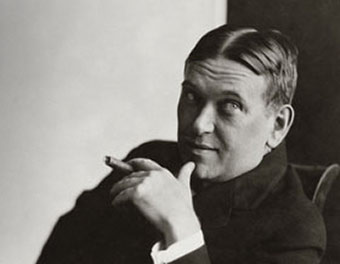
Like most of you kids, I’ve heard H. L. Mencken quotes all of my adult life.  He is sometimes called the “Sage of Baltimore” for his witty and caustic commentary.  Mencken was the ultimate individualist and he believed, above all, in liberty.  His dogmatic emphasis on liberty got Mencken labeled a liberal and a conservative, depending upon the times, but Mencken was always consistent.  Although he lived in the early part of the Twentieth Century, I think Mencken’s critiques apply to our current times.

In 1962, Murray Rothbard wrote an article entitled H. L. Mencken-The Joyous Libertarian. Rothbard suggested that Mencken was a rare bird because he was both a serious thinker and a humorist.  This is likely due to the influence Mark Twain had on the young Mencken.  Rothbard further stated that an individualist and libertarian had a difficult time ahead of him in the world of 1962, and he suggested there were three options:  1)  Retire from the social and political world into a world of esthetic contemplation; 2)  Try to change the world; or 3)  Stay in the world, enjoying the humor of the situation.  Mencken obviously chose door number three and we are all better for it.  His lampooning of his times ring true today.

Think about these quotes in the context of the issues we currently face:

Donald Trump.  “The men the American public admire most extravagantly are the most daring liars; the men they detest most violently are those who try to tell them the truth.”

Prohibition and the war on drugs.  The prohibitionists “lust to inflict inconvenience, discomfort, and, whenever possible, disgrace upon the persons they hate — which is to say, upon everyone who is free from their barbarous theological superstitions, and is having a better time in the world than they are. They cannot stop the use of alcohol, nor even appreciably diminish it, but they can badger and annoy everyone who seeks to use it decently, and they can fill the jails with men taken for purely artificial offences, and they can get satisfaction thereby for the Puritan yearning to browbeat and injure, to torture and terrorize, to punish and humiliate all who show any sign of being happy. And all this they can do with a safe line of policemen and judges in front of them; always they can do it without personal risk.”

The systematic destruction of public education.  “The most dangerous man to any government is the man who is able to think things out… without regard to the prevailing superstitions and taboos. Almost inevitably he comes to the conclusion that the government he lives under is dishonest, insane, intolerable.”

The Presidential campaign.  “A national political campaign is better than the best circus ever heard of, with a mass baptism and a couple of hangings thrown in.”

Global Warming.  “I believe that it is better to tell the truth than a lie. I believe it is better to be free than to be a slave. And I believe it is better to know than to be ignorant.”

War.  “Love is like war:  Easy to begin but very hard to stop.”

Why we okies are so punative.  “Puritanism. The haunting fear that someone, somewhere, may be happy.”

Ok, kids, you’re on your own.  Here’s your homework.  Look up H.L. Mencken and see if his insight isn’t timeless.  Let me know if you find some quotes relevant to  into our current issues.


Whatever happened to “protect and serve?”

The front page of the Oklahoman today reveals that the Oklahoma County Sheriff Whetsel is in trouble with District Judge Elliott over how much the sheriff charges inmates to stay incarcerated in the jail.  The sheriff is also in trouble with District Attorney Prater, who asked the state auditor to audit the sheriff’s financial records.

Whetsel originally asked the judge to set a jail rate at over $48 per day.  Knowing that the sheriff made money from inmate telephone calls and canteen, Judge Elliott asked why that revenue had not been deducted from the sheriff’s costs.  The sheriff went back and figured the rate again and settled at over $40.  Judge Elliott didn’t buy that sum either and set the figure at $32, since the sheriff contracted with DOC for that rate.  Now the judge is questioning why some inmates are held for days after they have posted bond.  The judge even told the sheriff’s representative he didn’t believe anything he said.

The sheriff’s difficulties are a symptom of the recent perversion of the criminal justice system.  Instead of protecting and serving their communities, law enforcement official are targeting crimes and citizens to extract revenue, thus incurring the wrath and distrust of the public.

Remember Ferguson, Missouri, Kids?  According to the April 15, 2015 issue of the Harvard Law Review, the municipal court there issued almost twice as many arrest warrants than any other city in the state.  The population of Ferguson in 2013 was around 20,000, but they issues over 32,000 arrest warrants for non-violent and traffic offenses.  If the offender didn’t show up in court they were assessed another fine of $120-$130 and a $50 new warrant charge.  If arrested, the offender was held in jail until court convened.  Of course, court only met three times a month and the offender was charged $30-$60 per day for his stay while waiting. No wonder there was such hostility toward law enforcement in Ferguson.

The law review article is critical of the practice of Oklahoma prosecutors, who can delay a case and not file charges for up to three years in exchange for $40 per month fee.  There has never been a  finding of guilt or guilty plea in these cases.  Further, the prosecutor is not accountable for the collection or expenditure of these fees.

The review also reveals that charging “usage fees” is an extremely profitable way to extract revenue.  Charging people with the costs of police investigations, prosecution, public defenders and the court’s use is common.  Also, some jurisdictions charge all arrestees a fee regardless of whether they are ever charged.  These fees are based solely on the officer’s say-so.  In Washington D.C. an arrestee can pay the officer on the spot to forego adjudication.

User fees are not regulated and there is no accountability.  The only entity which can arrest, charge and prosecute a crime is the government and the government has found a lucrative way to make a profit without transparency.  This mode of funding the criminal justice system erodes the confidence of the public and creates animosity toward law enforcement as evidenced in Ferguson.

The criminal justice system should be adequately funded and should be prohibited from profiteering.  We should not alow policing for profit.  It is a burden on the least of our citizens and it undermines our system of justice.

Police, prosecutors and judges are allowed wide discretion in the performance of their duties.  Coupling that discretion with the authority to extract money crosses the line into the legislative realm.  You kids remember from civics class that the legislative function is to fund government operations.  Allowing the executive branch to fund itself leaves no accountability to the legislature and to the people.

If Whetsel was funded properly by the county commission and was dependent upon them for operations there would be accountability and transparency.  Allowing the sheriff independent profit making authority is an improper delegation of a legislative function to an executive branch officer.  It is also an invitation to disaser and a bastardization of the justice system.


The time has come for medical marijuana

I recently attended a meeting of “Oklahomans for Health,” a coalition to legalize medical marijuana in the state of Oklahoma.  I know, kids.  You don’t even have to say it.  You think it will never happen in Oklahoma, but the coalition has some experience in these matters.  They believe we Okies are ready for medical marijuana.  I say there are compelling reasons to agree.

According to a report prepared by The Trust for America’s Health published in 2013, Oklahoma had the fifth highest mortality rate from overdoses of prescription drugs.  According to a March 11, 2012, Daily Oklahoman article, prescription drug overdoses were killing more people than traffic accidents, more than two per day.

The opiate abuse epidemic continues in Oklahoma.  Meanwhile, The Journal of the American Medical Association Internal Medicine published the results of a University of Pennsylvania study regarding the effect of medical marijuana legalization.  The study found states with legal medical marijuana had a mean 25% lower mortality from opioid overdoses than those where medical marijuana is illegal.  Not only that, but the mortality rate decreases for several years after implementation.  The first year after implementation of medical marijuana, the mortality rate decreased by 20%.  After the second year the rate decreased 25%.  The decrease in mortality was 30% in years five and six.  There are many anecdotal stories of patients  coming off opiates painlessly using this herb which has no side effects.  In addition, there is not one single case of overdose on medical marijuana.  In fact, it is likely impossible to overdose on marijuana.  Period.

A new study From Hebrew University in Israel came out February 17, 2016.  This study measured the effect of THC-dominate marijuana on pain which had previously proven difficult to treat.  The study found two-thirds of the patients experienced improvement in their hard-to-treat pain using THC-dominate marijuana, with robust improvement in their quality of life.  In addition, opioid use decreased 44% during the study and many of the patients were able to ditch opiates completely.  The beneficial use of marijuana to treat chronic and difficult to treat pain is found throughout medical literature.  This study is but one example.

Those are the facts, kids, but I’m not so naive to think that Okies will be completely rational about this topic.  This is an emotional issue for many people and there will be loud and strong opposition to legalization of medical marijuana.  The most likely opponents will come from law enforcement, big pharma and religious leaders.  Law enforcement will say there will be an increase in auto accidents, but that simply has not been the case in Colorado.  Big pharma has a huge financial interest in preserving their monopoly on prescriptions.  As for religion, I would challenge opposers to find compassion for fellow Okies who need relief from pain and who want an improved quality of life.  Do they disapprove of other medications?

Why is it that people in 23 states have access to this natural medication and Okies do not?  Is it better to have people addicted to opioids and risking death from overdose?  How patients deal with pain is between a patient and doctor.  Doctors routinely prescribe drugs off-label.  In other words, patients and doctors often agree to use drugs meant for one disease to treat another.  The state has no business telling people they may not access this natural and  proven medication.  Okies  are limited in their choices because of arcane laws while citizens in other states obtain pain relief and an improved quality of life.

Later this spring Oklahomans for Health will ask for your signature on a referendum to put legalized medical marijuana on the November ballot.  When enough signatures have been gathered, you will be asked to vote to legalize medical marijuana. Those who have been touched by chronic pain or opioid abuse as well as those believe medication decisions should be strictly between patient and doctor should seriously consider supporting this effort.  California legalized medical marijuana in 1996.  Twenty years is enough time for Okies to wait for equal access to this medication.


I’ll take my justice blind, please.

I ran across the above statute of “Blind Justice” at Guthrie’s Scottish Rite Temple.  If you haven’t been inside the temple, do yourself a favor and  schedule a tour.  The Neo-Classical architecture is unexpected in the middle of Red Dirt country and the temple is steeped in Okie history.  It’s well worth the trip but you have to schedule your tour in advance.

Blind Justice represents the Greek goddess Themis, who personified moral order, justice, wisdom and good counsel.  She is depicted as blind because justice is not subject to undue influence.  Everyone should be treated the same before our courts.  Themis holds scales which represent impartiality.  The sword tells us that justice can cut both ways.  Of course you already knew all this, so what’s my point?

What you may have forgotten or may not know is we had a big Okie Supreme scandal back in 1965.  One justice admitted in writing that he had taken bribes and he reported two others had done the same.  There was a big investigation, an impeachment, a resignation and ultimately the three justices were kicked off the Supreme Court.

At the time, Supreme Court justices were appointed by the governor with the advice and consent of the senate.  Okies decided more vetting was needed for appeals court judges so they approved a state question and the Judicial Nominating Commission was born. The commission consists of six appointment from the governor and six from the bar association.  These twelve elect a thirteenth, who cannot be a lawyer.  In addition, the Speaker of the House and President Pro Tempore each get an appointee, and neither of those can be lawyers.  This fifteen member commission vets all the applicants and presents the top three to the governor.  To limit undue influence, members of the commission may not hold elective or appointed office.

Not a single judge has been sent to jail or indicted since the JNC has been in use.  I know that is an absurd claim and it doesn’t prove the commission works.  Nonetheless, there are a lot of safeguards against undue influence and the commission makes a real effort to guard against political pressure.

Fast forward to 2009.  The legislature passed The Lawsuit Reform Act to limit recoveries from lawsuits.  In 2013 the Supreme Court ruled that the Lawsuit Reform Act was unconstitutional.  The legislature has been angry with the court ever since and has introduced numerous bills to change how high court judges get appointed to the bench.

Ok, kids, here is my point!  This session the Speaker and President Pro Tempore are sponsoring HB 3162.  This legislation has legs, because the party leadership is squarely behind it.  The bill has already passed the house.  The bill would require the commission to send all of the applicants to the governor and require the senate to approve the ultimate appointment.  Thus, the JNC would be reduced to pushing paper. The system would be ripe for political pressure and deal making.

Injecting politics into the judiciary is asking for trouble.  As you learned in civics, there are checks and balances built into our government.  It is the job of the judiciary to determine when actions are unconstitutional and our justices must be independent to make those determinations.  The legislature makes policy, but they may not pass unconstitutional acts.  Who is the check against their power if  not the  Supreme Court.

Maybe you weren’t aware that such an important bill is pending before the legislature.  HB 3162 is a grab for political power It would result in a serious disruption in the constitutional authority of the judiciary.  The legislature wants to rip off “Blind Justice’s” blinder and take away her scales.  We don’t need to go back to a system of bribery and political spoils in the judiciary.

Allbaugh’s Dire Situation

After yesterday’s Board of Corrections meeting, interim director Joe Allbaugh and board chair Kevin Gross released a letter stating the situation at prisons is “dangerous” and “dire” because of budget cuts.  Way to go, Joe!  At least this director is allowed to speak the truth.  The system has been broken for a long time and nobody at the capitol seems to pay attention.

Mr. Allbaugh is correct.  There will be a tipping point and the danger increases as the population grows.  It would be good for Mr. Allbaugh to make progress during his short honeymoon with the legislature and the governor.  Experience shows they will tire of his persistent reminders of a beast which will not be satiated.

Allbaugh’s public comments seem to be on target.  He has actually visited prisons and talked to staff.  He has assessed the needs, but he states publicly that it’s not his job to look at sentencing practices.  Perhaps he has been instructed to say that, but the problems in corrections are directly related to overpopulation.  Mr. Allbaugh’s problems and the resultant danger will not be resolved without restraint of those who cause prison growth.

The truth is that DOC has been covering the checks written by prosecutors for decades.  Here is how it works, kids.  Prosecutors have unbridled discretion to write their own policy regarding plea negotiations.  Less than 5% of cases go to trial.  The rest are plea-bargained.   Many, if not most judges are former prosecutors.  Judges almost always accept the recommendation of the prosecutor.

Prosecutors control whether charges are filed, what charges are filed and the sentence recommended.  I’ve heard prosecutors say that the prison budget is not their problem.  Of course it isn’t.  Nobody has made it their problem.  DOC continues to cover the cost of fulfilling their “tough on crime” campaign promises.  Of course, there are examples of prosecutors making efforts to use prison beds responsibly, but there is no systemic mandate to do so.

This is not a criticism of prosecutors for doing what is in their best interest.  It’s an adversarial system.  Nobody is advocating that they be reigned in.  The system doesn’t currently hold prosecutors accountable and they haven’t been restrained from using prison beds indiscriminately.  Prosecutors have been effective at blackballing legislation which would set limits on them or reduce sentences allowed on minor crimes.  Consequently, the need for prison beds grows.  This old Okie believes that Mr. Allbaugh’s headaches will continue until the folks at the Capitol wake up and tell prosecutors that DOC will no longer cover their checks.


Just call me a tree hugger.

The Bradford Pear trees are in bloom around my town.  The blooms are about two weeks earlier than usual and they are a welcome harbinger of spring.  The trees are ubiquitous in Red Dirt country for a good reason.  They are practical.  On my daily commute,  I used to drive past large plantings of these trees at seventy miles an hour and for a moment I would think, “Those trees are blooming.  Nice.”  Yesterday I took time to observe the blooms closely and I snapped the above photo.

These pear trees do not bear fruit, but I’ve always considered them quite practical.  They are flexible enough to withstand the Red Dirt winds and drought resistant enough to survive our hot summers.  Able to withstand pollution, the trees are perfect for areas which are heavily populated.  Some varieties of these trees are even bred to turn brilliant colors in autumn.

Reflecting on all this, it occurred to me that these trees could also be observed as an organic work of art.  Sure, there are practical reasons to have these trees.  They provide shade and of course they provide oxygen to the atomosphere.  Still,  their characteristics demonstrate that these trees exist for reasons beyond the pure functionality of being a tree.

I’m glad I took some time to observe and reflect on these trees.  Natural beauty is happening all around us.  Taking time to find the good around us is what the French call “Joie de vivre.”  I like to call it “living well.”  It’s all about being in the moment and cheerfully enjoying the good things in life, whether it’s wine, food, friends, conversation or the trees in our own back yards.  For me, it takes effort to still my mind, be in the moment and live well.  Still, I’m getting better at it and the effort is certainly worth it.

What are they thinking? *

The Okie legislature is kicking 111,000 people off medicaid while holding on to their precious tax cut.  Of course, this year’s cut is not the first.  The Oklahoma Policy Institute reported in January that there have been a decade of tax cuts by the Republican dominated legislature.  For the median income of $49, 800, the average savings is $228 a year.  The top 20% (over $246,000 per year income) got 72% of the tax cuts, while the top  1% got 26% of the tax reduction.  The average reduction in taxes for the top 1%  was over $16,000 per year.

I think the average Okie can figure out where he or she fits in to this scheme.  I’ve said before that I’m willing to give my fair share back if the top 1% will do the same.  I don’t think the legislature wants that.  All these tax cuts are supposed to “trickle down” and ultimately benefit the little guy, but that’s not happening.  In fact, the guys with the smallest income are getting their medical care stopped in favor of preserving these tax cuts that don’t amount to that much for most of us.

This is the type of behavior I believe violates Okie values.  Where is the compassion?  What about the Golden Rule?

Each member of the house of representatives must run for re-election.  The ones who are responsible for these tax cuts should not be back after November except to clean out their offices.  We’re probably talking about your legislator!  Okies, wake up!

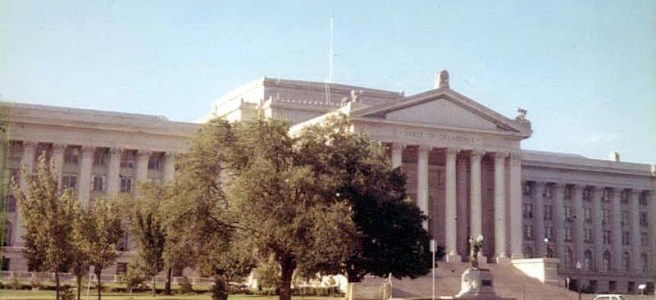
*Readers will note the use of the old “flat” capitol picture, rather than the newer “dome” pic.  I like the dome.  It’s nice, but it always reminds me that us Okies couldn’t afford the dome at the time.  Plus, I am not convinced that adding the dome  did not contribute to damage to the capitol building we are now repairing.


Governor’s “genius” fails again

What the heck is going on with the budget?

Funds are short partly because the Okie legislature is too reliant on oil and gas tax revenue.  This is not a new situation.  We Red Dirters who are old enough remember going through budget shortfalls in the 1980’s.  Politicians should have learned their lessons, but those folks have very short memories.  Oklahoma term limits of twelve years encourage legislative amnesia.  Politicians don’t care about the future because they won’t be in office when it all comes down.  Long term vision is not rewarded.

They should have seen it coming.  The state treasurer was warning them, but the governor’s financial genius never paid attention.  The projected downturn in funds was consistentantly underplayed or miscalculted.  Consequently, state agencies have to cut current year budgets again!

At the first cut in December, the governor’s finance secretary said the cuts were an “opportunity” for agencies to get creative and find ways to cut expenditures.  Today, another 4% cut was announced and the same genius said he thinks there are members of the legislature who don’t understand how serious this situation is.  Further, he said the situation calls for long-term solutions and can’t be fixed with short term budget “gimmicks.”  Really, Mr. Doerflingler?  It appears that YOU didn’t understand the situation back in December and expected agencies to use “gimmicks” to make the deficits go away.  Now, deep into the fiscal year, you finally understand it’s serious.

No, Mr. Doerflingler, you didn’t cause the budget failure, but you failed to recognize it while Treasurer Ken Miller was publically stating how bad it was.  But you’ve never paid any attention to anyone else, have you, Mr. Doerflingler?  Because you’re the smartest person in any room, right?  It was your job to project these deficits.  How else do you justify your $172,800 (plus benefits) salary?

During the governor’s “hiring freeze,” you gave you gave 400 of your employees raises.  Seventy-five of your employees got raises of over $10,000, while you tell agencies they have an “opportunity” to save money.  Now those agencies have only four months to make up a year’s worth of cuts to their budgets.  Thanks for nothing, Mr. Doerflingler.  You have failed at your job.


Hey*


Why Red Dirt?

Have you ever been to Oklahoma, where the wind comes sweeping down the plains?  Those of us who live here know the wind blows red dirt!  Just look at your vehicle after a spring storm!  Red spots of dirt glued with sprinkles of rain to the surface of doors, bumpers and windows, resulting in “Okie camouflage.”

We’re told the “red” color of soil results from iron oxide and the soil often needs supplemental nutrients.  We have plenty of “BS” in Okieland to enrich the soil and lots of cows as a source of those nutrients.  Yes, lots of hot air and BS!  We’ll be discussing that.

Why Dilettante?

Okay, it’s a rather fancy French word for a blog from the plains, but that’s part of the irony, right?  A dilettante is described as a lover or admirer of the arts.  I am certainly that.  I love the arts and I love artists.  “Dillettante” also means one who is a dabbler.  One who has a superficial, not serious knowledge of a discipline.

The first bit of advice when starting a blog is to find something the blogger is passionate about and narrow the blog to that passion.  I don’t want to narrow.  I want to expand, and my waistline proves it!  I’m interested in a wide variety of topics, but I don’t want to wade too deep.  So, I’m a dilattante, but with a “red dirt” perspective.

I’ve spent many years becoming expert in different areas.  The time has come to be a generalist, with an interest in everything!  I won’t delve too deeply, so I’ll appreciate any further edification from my readers.  Feel free to comment.  I don’t mind disagreement, but let’s keep it civil, ok?  Civil discourse is a true Okie value.  It’s one of the reasons this blog exists.

Who am I?  

I’m a proud Native Oklahoman.  My great-grandparents came to Oklahoma Territory as the final wave of adventurers moved west into unsettled sections of Oklahoma Territory.  They raised crops and livestok in the red dirt and eaked out a life for themselves and their children.  My grandparents suffered through the Great Depression’s dust and despair.  Both of my parents lived through the dust bowl and started their marriage as farmers until my dad decided to follow his passion in the construction industry.  Because of the economic expansion of the 1960’s, Dad was able to start his own company.  It was a dream his grandfather could scarcely imagine as a red dirt farmer, auctioneer, lawman and preacher.  Maybe he was a dilletantte too.

This background is  offered to  express my deep  appreciation to those who preceeded me, and to help the reader understand from where I come.  Because of the sacrifices of my predecessors, I was able to attend college and law school and I am daily grateful for my undeserved blessings.  My ancestors were acutely conscious of their resources.  They were conservationists because the earth was their livelihood.  Both sets of grandparents were FDR democrats and my Grandad Oakley was a “union man,” who was a vocal supporter of the benefits of collective bargaining.

I was raised to practice conservation, environmentalism and respect for the land.  Reflections upon “The Golden Rule” and my other church lessons taught me I should never take more than my fair share and I should offer assistance to those who needed help.  My lessons about Christianity included a prohibition against being judgmental and a heathy dose of tolerance.

The “Okie” values instilled in me do not seem as evident in Oklahoma today, but I know those values exist, perhaps hidden beneath the surface.  My musings are intended to be reminders of those values, both to the reader and to me.  Hopefully, we Okies will feel closer to our roots and others will gain an understanding of the land of red dirt.

*The greeting of “Hey!” is more common than “Howdy” in Oklahoma.